
Topics
We share the list
Two months on an open problem in LLM inference, with a Vizuara research team working on your paper alongside you. The goal is a manuscript ready to submit by 1 January 2027.

The same paper needs the same work. What changes is who does it.
| You | Mentor | |
|---|---|---|
| Literature review | ||
| Method | ||
| Experiments | ||
| Review of results | Weekly call | |
| Writing |
| You | Vizuara team | Lead mentor (Dr. Raj) | |
|---|---|---|---|
| Literature review | First draft | ||
| Method | First draft | Direction | |
| Experiments | Runs some | ||
| Review of results | |||
| Writing | Final review |
Every project in the cohort has the same four parties around it.
MIT PhD, 800+ citations. Sets the direction and mentors every team personally.
Draft the work, run experiments and review your results.
Choose the topic, run experiments and write the paper.
Assist our research team. Built and tested over six months.
MIT PhD, 800+ citations. Sets the direction and mentors every team personally.
Draft the work, run experiments and review your results.
Choose the topic, run experiments and write the paper.
Assist our research team. Built and tested over six months.
We have built and tested these agents over the past six months. They assist the Vizuara research team on your project. They do not replace it.
Finds, reads and maps the related work, and keeps the citation trail behind every claim.
Writes, launches and logs experiment code on Vizuara's GPUs.
Verifies numbers, plots and claims against the run logs and the sources before anything goes into the paper.
Keeps the full history of every handoff on the portal, so nothing is lost between rounds.
You could, for parts of the work, and many of you already use a coding agent every day. The difference is the system around the model.
Our agents work inside the Vizuara Research Mentorship Portal with the full history of your project. They run experiments on our GPUs and keep the logs, check every number against those logs, and carry a citation trail for every claim. They work for our research team, and the team decides what reaches your paper.
Building that system yourself is a project of its own. Here, it comes with the bootcamp.
There are no scheduled calls. Work passes back and forth between you and our team on the Vizuara Research Mentorship Portal, so a result never sits waiting for a meeting.
One round of feedback a week, and every result waits for the call.
Feedback starts as soon as a result arrives, so the work keeps moving.
An illustration of one week.
Every handoff is written down, so the reasoning behind each choice in the paper stays on record. The same model produced the ten Vizuara papers accepted at NeurIPS 2026 workshops.
Seven steps, with steps 5 and 6 repeating as often as the research needs.
We share the list

You pick one

Assigned to your topic
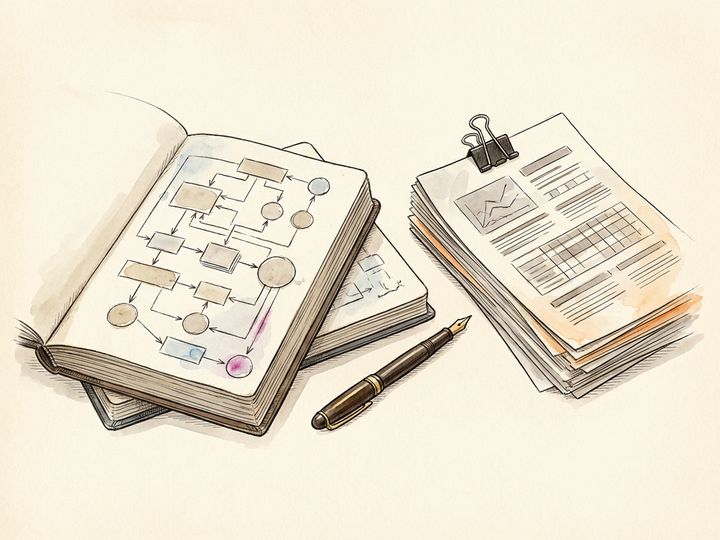
Literature, method, experiments
Experiments and results

Improve and run more
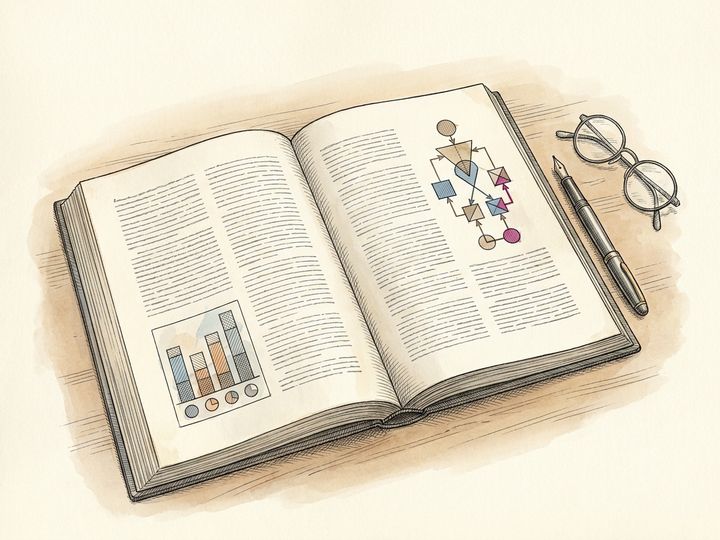
Written together

1 January 2027
Each part of the bootcamp ends up in a specific part of the paper.
Long-context inference is limited by the memory held in the key-value cache. We study eviction policies that keep the cache within a fixed budget, describe a scoring rule that combines attention and recency, and compare it with existing policies across context lengths and memory budgets.
Serving language models over long inputs requires storing keys and values for every token. As context grows, this cache dominates accelerator memory and limits the batch size a server can hold.
A common response is to evict tokens that are unlikely to matter, but the choice of policy changes accuracy in ways that are not yet well understood. We ask when eviction preserves accuracy, and which signals predict the importance of a cached token.
Existing evaluations often report accuracy at a single budget, which hides how quickly quality changes as memory shrinks. We measure across a range of budgets and context lengths so that the trade-off is visible.
Our contributions are a scoring rule, an evaluation protocol across budgets, and an analysis of failure cases.
Cache compression methods fall into three groups: eviction of tokens, quantization of stored values, and low-rank approximation of heads. Eviction methods differ mainly in the score used to rank tokens [3, 7, 12].
Several studies examine where attention concentrates and report that a small set of tokens receives much of the attention mass. Our scoring rule builds on these observations [5, 9].
Becomes the introduction and related work.
quantization reduces the bytes per token, and low-rank methods shrink each head. These ideas are complementary to ours.
We keep a cache of at most B tokens per layer. At each decoding step, every cached token i receives a score that mixes its accumulated attention and its recency:
When the cache exceeds B, the lowest-scoring tokens are removed. The rule adds no parameters beyond α.
Updating scores takes one pass over the cache per step, which is small next to the attention computation itself.
Scores are stored alongside each cache block, so no extra memory traffic is needed during decoding.
We select α on a held-out set and keep it fixed across tasks and budgets.
The policy runs inside the serving engine's cache manager, so evicted blocks return to the shared memory pool and can be reused by other requests in the batch.
Becomes the method section.
We evaluate on long-context question answering and summarisation, varying the memory budget and the context length, and compare against recency-only and attention-only policies.
Each configuration is repeated with several seeds. Budgets are expressed as a fraction of the full cache so that results are comparable across context lengths.
| Policy | Acc. | Mem. |
|---|---|---|
| Full cache | ||
| Recency | ||
| Attention | ||
| Proposed |
We examine how accuracy changes with budget and context length, and where each policy fails.
Your runs and ours become the figures, tables and results.
We discuss when the policy helps, where it fails, and what the failures suggest about which tokens matter for long-context tasks.
We presented a budget-aware eviction rule and an evaluation across budgets and context lengths. Future work includes learned scores and combining eviction with quantization.
The evaluation covers two task families and a limited range of model sizes.
Becomes the abstract, discussion and conclusion.
Example pages in a two-column conference format. Your topic, figures and results will be your own.
Every venue below reviews papers on OpenReview, and every deadline falls after 1 January 2027, so a finished manuscript can go straight to one of them. We choose the target with you, based on the topic and the strength of the results.
Deadlines marked expected follow each venue's 2026 schedule and will be confirmed when the 2027 calls are published. Depending on the topic, we may also aim for ICML 2027 workshops, CPAL 2027 in Tokyo, EMNLP 2027 or CVPR 2027 workshops.
This year, ten papers from Vizuara's research program were accepted at NeurIPS 2026 workshops. They came out of the same asynchronous model this bootcamp uses, and two of them are about LLM inference.
Read the announcement ›Seven of the ten accepted papers.
The full topic list is shared when the cohort starts. These examples show the kind of question it covers.
How should the draft length adapt to batch size and context length?
Which cached tokens can be evicted or quantized without hurting long-context accuracy?
Where do FP8 and FP4 formats lose accuracy, and can that loss be predicted before deployment?
How do prefix caching and batching decisions change latency, throughput and reproducibility?
Can sparse or linear attention close the gap to dense attention on real GPUs?
How much extra reasoning compute is worth spending on a query, and when should a model stop?
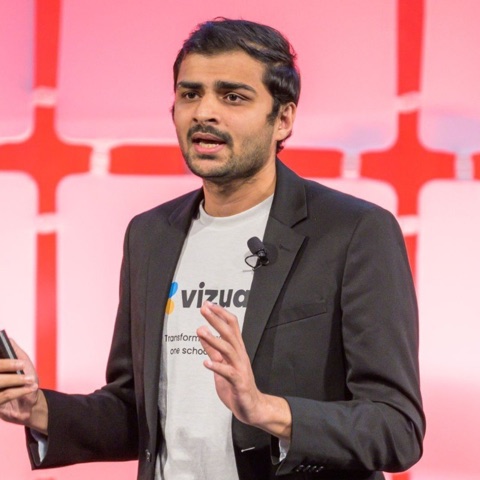
Raj designed and taught Vizuara's 5D Parallelism and Inference Engineering workshops, the first two parts of the GPU Trilogy. His research spans scientific machine learning, Bayesian neural ODEs and fluid dynamics, and more recently the evaluation of language models. In this cohort, he mentors every team personally.
No one can guarantee that NeurIPS, ICML, ICLR or any other venue will accept a paper, and no credible program will promise it. Peer review exists so that an independent community decides whether a piece of research meets its standard.
What you pay for is the research effort itself: the attempt to turn a difficult real-world problem into publishable scientific work, with a team that designs experiments, develops methods, evaluates them rigorously and keeps iterating until the paper is ready.
The experiments our team runs are paid for from Vizuara's own budget.
We mostly provide tools such as Google Colab. Anything beyond that is yours to arrange.
We only take on topics whose experiments fit modest compute. If a problem needs more than our threshold, for example pretraining a model or serving very large models at scale, we cannot take it on, however interesting it is.
The group is small, because Dr. Raj Dandekar mentors each team personally.
Compute for your own experiments beyond tools such as Google Colab is not included.
1 November 2026 to 1 January 2027 · Entirely asynchronous · Questions? Write to research@vizuara.com
The first cohort starts on 1 November 2026.
Enroll for ₹95,000